Seborrheic Keratoses Bryn Mawr Bryn Mawr Skin & Cancer Cells Institute
Acknowledging A Seborrheic Keratosis And Why It Matters: Dr Hendi & Partners: Skin Cancer Specialists While the specific cause remains unidentified, researchers have discovered some crucial findings. SKs seem to run in households, and it shows up that some individuals inherit a propensity to develop lots of SKs. Although these Cryosonic - Expert advice on skincare developments establish on both sun-exposed and non sun-exposed skin, some researches suggest that sun direct exposure may play a role. And while SKs may seem to multiply and spread to various other locations, they are not infectious.
Appearance Of Seborrheic Keratosis
How to stop seborrheic keratosis from forming?
There is no recognized method to avoid seborrheic keratoses, as they often tend to boost with age and may be genetic. Routine skin checks can help check any type of new growths.
Removal techniques include cryotherapy, cut biopsy, curettage, and cautery. Among the crucial elements to keep in mind regarding seborrheic keratoses is that they are completely benign and do not have the potential to turn into cancerous lumps. This need to give confidence to those that might be concerned regarding the long-term ramifications of these developments. Unlike various other sorts of skin lesions, such as cancer malignancy or basal cell cancer, seborrheic keratoses do not have deadly qualities. Among the alternatives for treating seborrheic keratosis lesions is cryotherapy, which involves freezing the damaged area with fluid nitrogen. This freezing process ruins the excess skin cells and permits much healthier skin to grow in its place. This excessive production can result in the development of seborrheic keratoses lesions. In regards to symptoms, people with seborrheic keratoses may experience hyperpigmentation and development in the affected areas This implies that the coloration of the skin may be darker than bordering locations. because of raised melanin production. However, this is not always the case as some sores might show up lighter than normal skin tones. Seborrheic keratoses can be dark or brown, gray, black, tan, or skin-colored. Because SKs are benign, treatment is normally not needed. Therapy may be advised if the growth is big or quickly aggravated by clothes or precious jewelry. Occasionally, a SK is treated since the individual considers it unsightly. In these last 2 cases, there are a few therapy choices. Seborrheic keratosis often tends to impact middle-aged and elderly individuals. After half a century old, people can anticipate seborrheic keratoses to show up at some time.
Seborrheic keratosis begins as little bumps with a rough texture and slowly enlarges to as large as half a buck.
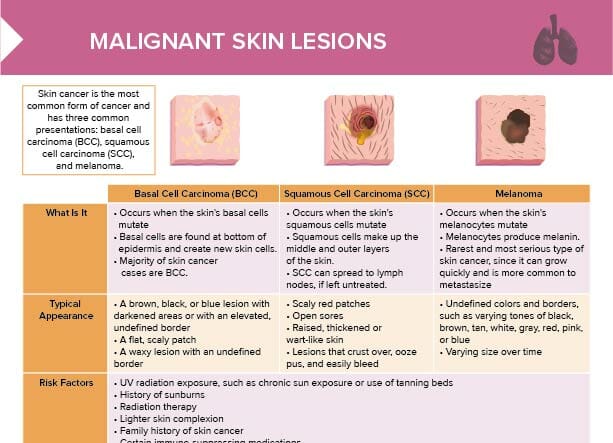
While seborrheic keratoses are generally harmless and do not position any kind of considerable health and wellness threats to patients, it is very important to differentiate them from deadly skin lesions or tumors.
One is to ice up the growth making use of liquid nitrogen, which is a lot more effective on smaller sized, flat growths.
Early analysis safeguards your health and wellness and provides you quality.
Curettage, an additional typical therapy technique for seborrheic keratosis sores, includes removing the growth making use of a curette-- a small instrument with a sharp side.
They can range in color from light tan to dark brownish or black.
Skin Cancer Cells
Although it's common, exact info concerning acne can be scarce. After eliminating the seborrheic keratosis, your physician might do a biopsy on it to look for skin cancer. People who have yet to reach their 50s are less most likely to create seborrheic keratosis than those who are over that age variety. However, the early stages of the growth can start appearing earlier. Those that have moms and dads or grandparents with seborrheic keratosis are much more likely to get them when they are older. Seborrheic keratosis sores can be round or oval and might have well-defined boundaries. They usually show up elevated from the skin surface area. Objective and positioning of servicesUbie Physician's Note is a solution for educational purposes. The provision of details by medical professionals, physician, etc is not a clinical treatment. If medical therapy is needed, please consult your doctor or clinical organization. Seborrhoeic keratosis is a harmless warty place that appears during adult life as an usual sign of skin ageing. Seborrheic keratoses are even more of a cosmetic annoyance than a medical concern. Nonetheless, their look can be unusual, and it is ideal not to overlook new developments on the skin, which could be cancer cells. It is considered a benign growth of skin cells (specifically keratinocytes). Medical study constantly shows that these lesions do not generally advance right into melanoma or various other skin cancers cells. The precise root cause of seborrheic keratosis stays unidentified. However, factors such as genes, age, sunlight exposure, and hormone modifications are believed to contribute to its growth. While any person can create seborrheic keratosis, it tends to be much more common in older people.